


Welcome to Your Amazing Guitar Adventure: Discover Your Instrument!
Hello, future guitar superstar! Get ready to start an exciting journey that will fill your heart with music and your hands with awesome skills. Your guitar is more than just an instrument—it’s your trusty musical friend that will take you on adventures full of creativity and fun. Today, we’re going to explore all the cool parts of your guitar and learn why each one is important.
The Acoustic Guitar Body: The Heart of Your Music

Imagine the body of your guitar is like the big, round drum that makes your music loud and clear.
- Big and Beautiful:
The body is the large, hollow part of your guitar. It acts like a magic box that amplifies the sound of your strings, filling the room with melody. - Sound Hole:
Look at the round opening on the top—it’s called the sound hole. This is where your guitar sends out its beautiful sound, like a window letting sunshine in.
The Neck and Fretboard: Your Musical Map
The neck of your guitar is like a long road where your fingers travel to create notes.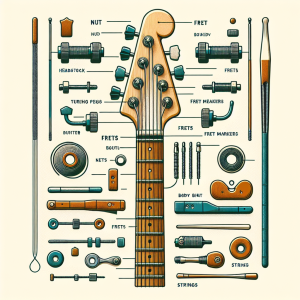
- The Neck:
This is the long, thin part where you press your fingers on the strings. It helps you play different notes by using metal strips called frets. - Fretboard Magic:
The fretboard is the flat part with frets. Each fret changes the note of a string. When your finger is close to a fret, your note sounds clear and bright. - Know Your Strings:
Your guitar has six strings, numbered from 1 (the thinnest, highest sound) to 6 (the thickest, lowest sound). Learning where each note lives on the fretboard is like having a treasure map to your music!
The Headstock and Tuning Machines: Your Guitar’s Helpers
At the end of the neck, you’ll find the headstock. It holds the tuning machines, which are little dials that help you tune your guitar so every chord sounds just right.

- Tune Up:
Turning a tuning machine tightens or loosens a string. With your guitar in tune, every note and chord becomes a perfect piece of your musical puzzle. - Tools for Tuning:
You can use an electronic tuner or learn to tune by ear as you get more confident. Each time you tune, you train your ear and make your music sound amazing!
The Bridge: Holding It All Together
The bridge is a special part on the body of your guitar that keeps your strings in place.
- Keeping Things in Order:
The bridge helps transfer the vibrations from the strings into the body of the guitar, making your sound rich and clear. - Smooth Playing:
A well-set bridge makes it easier to press the strings and creates a balanced, comfortable playing experience.
Pickups and Electronics: Shaping Your Sound
If you have an electric guitar, pickups and electronics add extra magic to your music.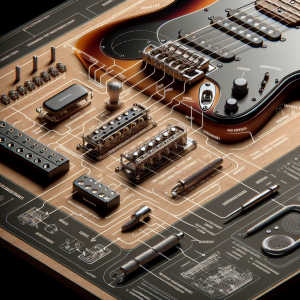
- What Are Pickups?
Pickups are like tiny microphones that capture the vibrations of your strings and turn them into electrical signals. They let you change your sound with different effects. - Types of Pickups:
- Single-Coil Pickups:
They give a bright, clear sound—perfect for rock, blues, or country. - Humbucker Pickups:
They provide a thicker, warmer sound and help reduce unwanted noise.
- Single-Coil Pickups:
- Tone Controls:
Your guitar also has knobs for tone and volume, which let you adjust how loud or soft, bright or mellow your music sounds. Experiment with these controls to find your unique vibe!
The Art of Tuning and Maintenance
Mastering Tuning
Before you play a single note, your guitar must be in tune. Tuning is like setting the stage for a great performance:
- Standard Tuning:
Most guitars are tuned to E, A, D, G, B, and e (from the thickest to the thinnest string). This is the foundation for every song. - Using a Tuner:
You can clip on a small electronic tuner, use a pedal tuner, or even a tuner app on your phone. These tools help you adjust each string until it sounds just right. - Tuning by Ear:
As you get better, try tuning by listening to the notes and matching the pitch. This trains your ear and makes you a more skilled musician.
Keeping Your Guitar Happy

Taking care of your guitar is super important:
- Clean Your Strings:
Wipe them with a soft cloth after playing to remove oils and dirt. - Change Your Strings:
Old strings can sound dull. Changing them regularly keeps your guitar sounding bright. - Store Properly:
Keep your guitar in a place with a stable temperature and humidity to avoid damage and keep tuning stable.
Final Thoughts: Embrace Your Musical Adventure
Your guitar is a gateway to a world of beautiful music. Every part of it—from the body to the neck, headstock, bridge, and even the pickups—plays a special role in creating the magic of sound. When your guitar is well-tuned and cared for, every chord you play and every note you strum comes out with clarity and joy.
Remember, every great guitarist started exactly where you are now. Take your time, practice regularly, and let your passion for music grow. Celebrate every little win, whether it’s nailing your tuning, mastering a chord, or hearing your guitar sing in perfect harmony.
So, grab your guitar, find your perfect spot, and let the music flow. Embrace every moment of your journey, and soon you’ll be creating melodies that touch hearts and light up the world.
Happy playing, and welcome to your incredible musical adventure!

Lesson Audio: